
AIDA Principle:
Effectively Implementing the AIDA Formula in Content Marketing!

Klaus Huber
19th February 2021
What does the AIDA formula exactly mean, and why is it so crucial for the field of online marketing? How and where is it applied, and what value does it offer? These and other questions will be answered in this article.
What does AIDA stand for?
Although the name may suggest otherwise, the AIDA formula has nothing to do with a cruise ship; instead, it refers to a fundamental communication principle in traditional marketing.

In an ideal buying decision, a customer goes through four stages. These four stages are represented by the acronym AIDA:
A stands for Attention
I stands for Interest
D stands for Desire
A stands for Action
The AIDA model originated in 1898, developed by Elmo Lewis, a US advertising strategist. Even today, it remains one of the foundations of marketing and is one of the most well-known models in advertising research. However, over time, it has had to be adapted again and again, as its relevance has become controversial despite its fame.
The 4-Stage Model
1. Attention: Attracting Attention
In this first phase, the goal is to capture the potential customer's attention. The target audience should consciously perceive the message being conveyed. To achieve this, advertising materials and instruments such as slogans, signal colors, or graphic elements are used. However, this is not as simple as some might think. Within the first ten seconds of viewing, a potential buyer decides whether an ad is of interest to them or not. Therefore, you have limited time - make sure your advertising message stands out immediately and leaves a lasting positive impression.
2. Interest: Sustaining Interest
After gaining a customer's attention, it is essential to arouse their interest and maintain it in the next step. In this second phase, products and brands are presented, their strengths and uniqueness (USP) emphasized, usage scenarios demonstrated, and the possibilities and benefits of the acquisition are introduced. Potential customers should feel that their interest is being piqued. Therefore, it is crucial for advertisers to understand what interests their target audience and what needs they have.
Tipp: Using numbers and facts is recommended here. Highlighting the product's value is more effective when supported by numerical data.
3. Desire: Identifying or Creating Desires
At this point, it becomes a bit more challenging. The existing interest must be intensified to the extent that it transforms into a concrete desire.
Emotions should be used, preferably positive emotions, conveying to the customer that their life will improve positively through the purchase. However, negative emotions can also be advantageous. For example, presenting a short-term price advantage can create a stronger desire to make an immediate purchase.
4. Action: Taking Action - Making the Purchase
In the final phase, the prospect must be motivated to take action; after all, they should either buy the advertised product or use the offered service.
This is where the call-to-action plays a central role. Often, specific buttons with action prompts are used for this purpose. If the prospect is still hesitant, you can make the buying decision easier for them by offering, for example, a new customer discount or something similar - enticing offers always help.
The Application Scope of the AIDA Model
The AIDA model can be applied anytime and anywhere. This can be, for example, on a website, in marketing, or in the sales of products and services. The AIDA model fits in all situations!

Your Own Website
In the first step, it is essential to design a well-formulated headline and a sub-headline. They need to catch the visitor's attention right away to create interest. Additionally, a suitable image can be added to further enhance interest. It is well known that people decide very quickly whether they want to read a text or not. Visual impressions help keep visitors on the website.
A website is crucial because without it, you practically don't exist. Most users research specific products or services on the internet before considering them. However, this requires initial traffic to reach users optimally. Moreover, you should know what expectations visitors have for your website to reduce bounce rates and increase the duration of their stay. Users are at the forefront and should never be overlooked.
Here are the necessary preparations for your advertising text summarized in six simple steps:
- Determine the target audience / Research wishes and problems
- List the product features of your offer
- List the customer benefits
- Set the main purpose for your target audience
- Proper address and tone are essential
- Determine the result (What do I want to achieve with my content?)
The AIDA Principle in Online Marketing
The AIDA principle is also applicable in online marketing. The various possibilities of online marketing allow for excellent and even accelerated implementation of the individual stages of AIDA. Elements like "calls-to-action" or "swipe-up links" are particularly suitable here. Considerable success can be achieved through advertisements, especially on social media platforms. That's why it is crucial to stay up-to-date and be well-informed about trends, especially to attract and win over the young customer base.
Concrete Examples of the AIDA Formula
To help you understand the concept, here's a small example:
Imagine you're searching the internet for a new smartphone. Now, if a specific online shop advertises offering a 50% discount on all smartphones, your attention will be captured. Furthermore, this shop also offers a wide range of high-quality brands, sparking your interest. One model might stand out, meeting all your requirements and desires for a smartphone. This leads to a strong desire to possess it. Finally, all that's missing is a clear call-to-action from the online shop. This aspect is fulfilled by the typical "Buy Now" button.
AIDA Formula in a McDonald's Advertisement:
The AIDA model can be demonstrated effectively through an advertising campaign. In this case, a campaign from 2019 by the fast-food chain McDonald's has been chosen as it helps illustrate the four stages of the purchasing process even more clearly.
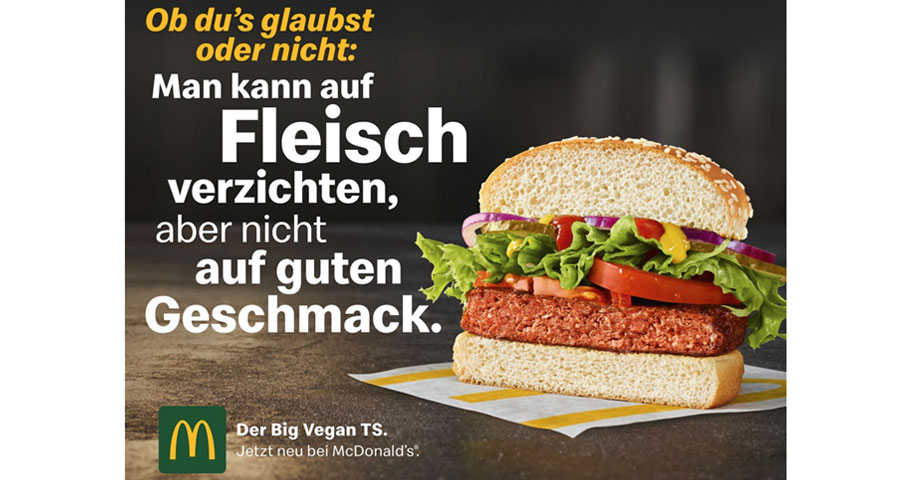
In this advertisement, you can see a provocative message, designed intentionally that way. In the first stage, the goal is to capture the consumer's attention. This is achieved in this example for specific reasons:
First
the broad audience is addressed - the existing meat-eating customers. They are confronted with the statement that one can do without meat without compromising on taste.
Concretely, this appeals to the consumer's environmental consciousness. The text is displayed in different sizes to draw attention to certain keywords. The word "Fleisch" (meat) stands out because the topic of meat consumption has gained increasing importance in today's society. In the ongoing debate on sustainability and animal welfare, the demand for meatless protein sources is growing louder.
Next
the advertisement addresses vegetarians and vegans. Their attention is gained by establishing a completely new connection between the fast-food chain McDonald's and the topic of veganism. Now, they also feel addressed, which was less or not the case before. Sustainability and fast food did not go together previously. Thus, the goal of the fast-food restaurant to win a new target audience is achieved.
Once the consumer's attention is captured, the second step follows: interest.
The consumer is encouraged to actively perceive the advertising message. The presented problem is directly accompanied by a solution. The goal in this phase is for consumers to say, "I've always liked McDonald's, and I'm sure I'll like this burger too!"
For the newly acquired target group, interest is developed because a solution is offered directly to them. And that comes in the form of traditional fast food, which is often withheld from this group.
The Next Step
is to create the desire for the offered product. The unique selling point of the product has already been communicated. Now, the desire sets in. The new burger has been presented in a way that allows customers to recognize each individual component, making it look particularly appetizing. Despite the innovation, customers can see that essentially nothing has changed because the taste remains the same. Interest and desire usually go hand in hand. The customer goes from "I like this!" directly to "I need this!"
In the Last Step
as explained earlier, comes the action. It involves providing the consumer with the necessary information to take action. The integrated logo plays a role here. It is placed in such a way that it is not in the foreground but still clearly visible. Additionally, the name of the new product is positioned next to it, allowing the customer to communicate directly what they want during their next visit to McDonald's.
AIDA Formula in the Context of Social Media
The AIDA formula can also be excellently explained through a post or content on social media.

Attention:Your post must stand out!
Standing out from the crowd is not easy, especially considering the sheer number of posts that go through the internet every day. To achieve this, you need to post something unique, something that is not seen every day. Whether through eye-catching images or particularly provocative or humorous words, the key is to make users take a closer look at your post and not simply scroll past it.
Interest:The content must be compelling
To prevent users from scrolling away, as mentioned in the previous point, you need to ensure that your content is compelling. In this step, it is essential to know what your followers want to read or see. Build your message based on your strengths, but don't forget authenticity, as users want to be able to identify with you.
Tipp: It is also recommended to use numbers and facts. Using statistics can highlight the value of your product or service.
Desire:Engage Your Followers
The goal is to generate long-term success. This can be achieved by regularly posting content that appeals to your followers and provides added value. Create posts that spark curiosity and interest in seeing more. This way, your success will be sustained over time. In the fast-paced world of social media, you can't rest on your laurels for too long.
Action:Now, users must take action
Now we come to the ultimate goal of all this: acquiring customers. If users like your content, they will eventually subscribe to your page. This means that you have gained new potential customers, and the likelihood of them buying products from you has increased. Additionally, this helps improve your company's image.
Criticism
Over time, the AIDA model has received criticism due to its simplicity. The process is rigid and does not consider various aspects. One such aspect is that a purchase may not always occur. Therefore, a company must consider all possible scenarios in their planning, as the AIDA model is just a basic principle. Relying solely on this concept may not be sufficient. As a result, the model has been continuously expanded or modified to make it more applicable to the present time.
The Vampire Effect
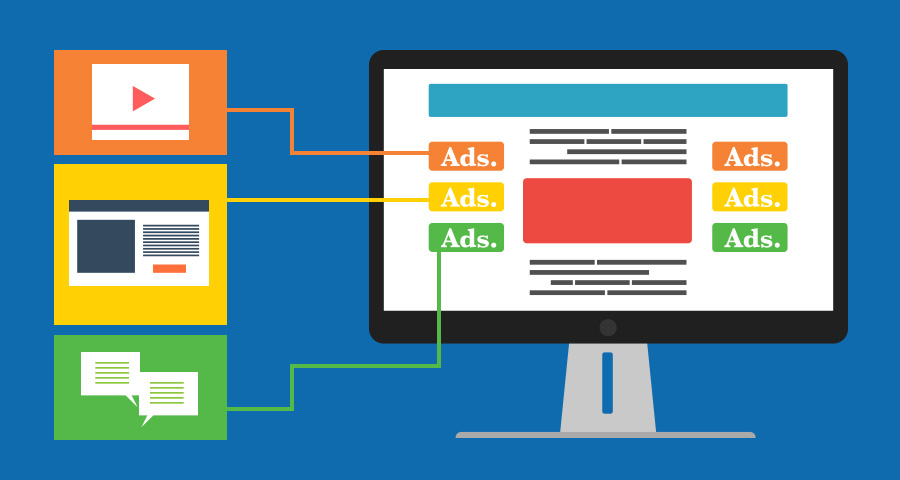
The application of the AIDA model can carry the risk of triggering the so-called "vampire effect." This means that the attention, which should ideally be focused on the product, is distracted from the product. This can happen when distracting elements are used within the advertisement. Distracting elements may include testimonials (celebrity endorsements), attention-grabbing music, bright colors, jokes, or sexually suggestive content. If these elements do not align with the product or brand, it creates a distraction. The true purpose of the advertisement gets lost. The focus should be on the product and not be diverted by excessive stimuli.
Extension to AIDAS and AIDCAS
Marketers must constantly adapt to new trends and developments, which is why the original AIDA model has been slightly modified.
The "S" in AIDAS refers to customer satisfaction, standing for the English term "Satisfaction." This extension is significant because it is not just about a single purchase; the goal is to ensure customer satisfaction, leading to repeat purchases. Long-term success is the ultimate objective, and customer retention is one of the most crucial aspects in marketing communication today.
The "C" in AIDCAS stands for Conviction. In this phase, the product or service's advantages are deliberately highlighted compared to other providers. This conviction then solidifies the customer's purchase decision and evokes positive feelings.
Conclusion
The AIDA formula is a simple tool that can still be used without any issues today. Through its four phases, marketing efforts can be developed to effectively reach potential customers. As it is a basic model, additional aspects and methods should be considered to meet current demands optimally. However, using the AIDA formula can hardly go wrong.
Need support in content marketing? - We are here to help!
If you find this topic still complex but do not want to compromise on ideal and user-oriented content, our SEO agency is here to assist you. With over 15 years of experience, we know precisely what matters in content marketing and can guarantee your success, all at fair prices!
If we have piqued your interest, you can now request a free quote.