
SEO for Multiple Domains:
What You Need to Know in 2022!

Klaus Huber
28th July, 2021
Do you want to maximize your SEO strategy?
Have you ever wondered how to dominate the first page of search results?
If so, you've come to the right place. Today, we introduce you to the concept of Multi-Domain SEO, an extremely effective long-term strategy that can lead your online presence to maximum success.
But what exactly is Multi-Domain SEO?
Many companies use a clever marketing trick and present themselves with multiple brands. For example, the pet food brands Sheba and Whiskas belong to the same corporation, "Mars Incorporated."
The competition between these brands is merely a facade because no matter which product the customer ultimately chooses, the revenues flow to one place.
You can apply a similar principle to your online business by creating multiple domains with different content to target various audience segments.
In this article, we will show you what to consider and how to succeed with this strategy.
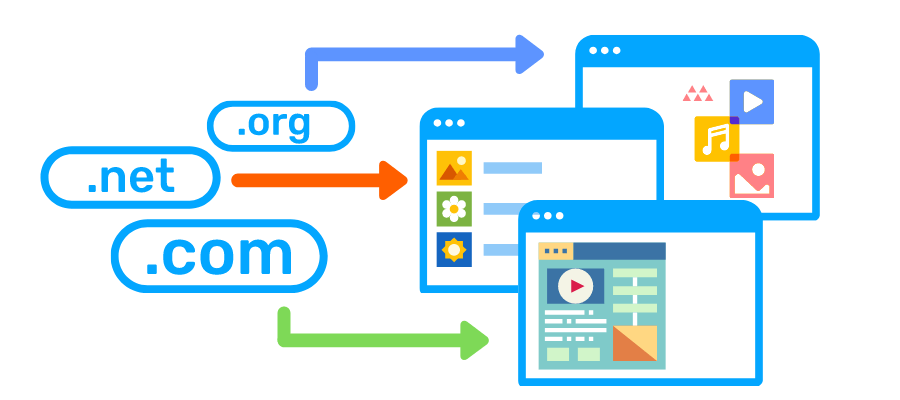
How are domains and search engines related?
What exactly is a domain? A domain is a component of the URL and can be divided into a Third-Level Domain (Subdomain), a Second-Level Domain (SLD), and a Top-Level Domain (TLD):
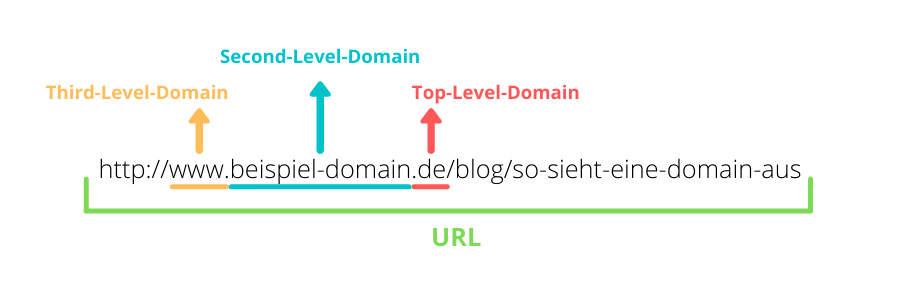
Each content on the website is assigned a unique URL (the so-called permalink), and Google evaluates these individual URLs of a page as related.
Usually, the content of a website exists under a single domain, but many entrepreneurs purchase several similar-sounding domains to prevent their competitors from doing the same.
The domains for a shoe retailer named Schuster could look something like this:
www.schuhe-schuster.com
www.schuster.com
www.schuhe24.com
These domains are completely different for the search engine, even if they sound similar. What many overlook is that with different Third-Level Domains, Google recognizes different websites, regardless of whether they have the same Second-Level Domain:
www.example.com
and
sub.example.com
For us, these pages seem clearly related, but for Google, they are technically two different entities.
TIP: For the Multi-Domain strategy, it is better to use different Second-Level Domains, as they also provide a clear visual separation for the customers.
Unfortunately, many of these purchased domains are quickly forgotten or receive little maintenance. If you offer the same or similar content on all domains, there is a risk that Google will consider this as duplicate content and penalize the pages.
Therefore, you must carefully plan how to distribute the content across your domains.
When is using multiple domains in SEO beneficial?
Multi-Domain SEO is an advanced approach to search engine optimization, which can involve significant effort. However, having multiple domains is practical in many ways, especially when the website has become very complex, and you want to separate specific content or functionalities.
We have compiled a list of all areas where the Multi-Domain SEO can be helpful.
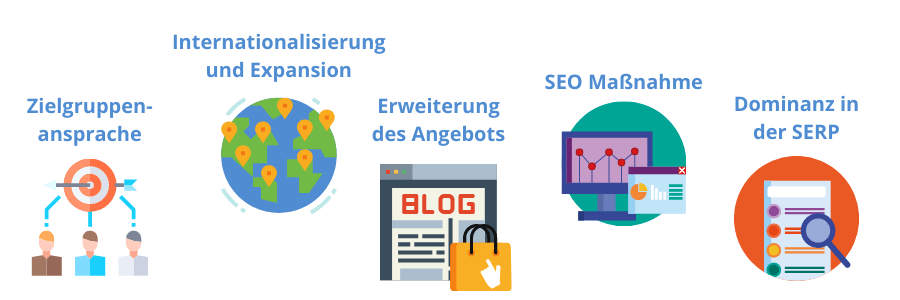
Targeting Different Audiences
This strategy is beneficial when you can address completely different target groups and niches on different pages. This could be the case when offering both B2B and B2C services.
The principle is also excellent when you want to sell products in different price ranges or with different brand images. Many companies have a separate brand for each price range to provide the right offer to every customer.
As a general rule: the more complex the website, the more it is worth dividing content across multiple domains. Make sure that the content does not repeat. The only exception is country-specific websites, where duplicate content is useful as they are offered in different languages.
If you already have multiple brands or have acquired existing brands, you cannot avoid Multi-Domain SEO. Trying to fit everything on one domain would only confuse your customers unnecessarily.
Internationalization and Expansion
You also need multiple domains if you want to run websites for multiple countries (even if they are the same language). This allows you to address different national characteristics (e.g., different currencies, taxes, and prices).
TIP: Use the hreflang tag and direct users from the homepage to the corresponding page. For example, from www.example.com to www.example.de.
In general, Multi-Domain SEO is suitable as a strategy when planning to expand into new markets, not only geographically but also with new products and services. This way, you can better position your entire brand instead of just promoting a single page.
Expanding Your Offerings
If you offer additional online services such as an online shop or a blog, having multiple domains can also be beneficial. For instance, you can designate a blog with the Third-Level-Domain "blog." This allows you to place new content in a more specific manner.
Many product manufacturers offer their own lifestyle blogs that either provide more details about the products or offer information related to the overarching theme of the product. Fashion shops, in particular, utilize this strategy to provide styling tips for different target audiences.
As an Additional SEO Measure
If you run a larger company and have already exhausted your previous SEO measures, employing Multi-Domain SEO as a long-term strategy is worthwhile.
This way, you can fully leverage the SEO potential to achieve maximum success for your business. This concept is also suitable if you want to rank on the first page for a specific keyword.
Dominance in the SERP
If you want to dominate the first page of the SERP, multiple internet presences are the most effective way. This allows your domains to rank multiple times for a specific keyword, significantly increasing the likelihood that customers will land on one of your pages.
For example, for the keyword "jeans damen" (women's jeans), both the online shops "Bonprix" and "AboutYou" as well as "Otto" rank. For customers, these appear to be different shops, but all three belong to the "Otto Group" corporation.

It doesn't matter which shop the customer chooses, as the revenues ultimately flow to the Otto Group.
Advantages of Multiple Domains
Curious about whether the Multi-Domain strategy is right for you? We have summarized a few advantages and disadvantages of this concept for you.
- Having multiple domains provides better combinations and opportunities to place your keywords on individual pages. This often results in more traffic and more appearances on the search results page in Google, as you can optimize your online presence for a larger number of keywords.
- Your brand awareness increases significantly, increasing the chances that customers will directly enter your brand name in the search bar. This allows you to establish your name and be found even faster.
- With country-specific domains, you can increase the trustworthiness of your site in each country by adapting your website to regional specifics and using the appropriate Top-Level Domain for the country. So, if you also want to be active in France, using the Top-Level Domain ".fr" will make you appear much more reputable.
- If you interlink the pages with each other, it has a positive effect on your backlink profile. However, this is only effective if the linked websites are perfectly optimized. Only then can you generate significant link authority, which is crucial for a top-ranking in Google.
- Having multiple brands and domains reinforces the sense of freedom of choice for your customers. They are more likely to make a purchase from you, allowing you to increase your revenue as all profits come together in one place.
Disadvantages of Multiple Domains
- In general, it is more challenging to build trust and authority for multiple domains.
- A Multi-Domain strategy requires more effort in terms of management, as SEO measures need to be implemented for multiple pages.
- If poorly executed, customers may get confused because they do not know which brand they have landed on.
What to Consider with Multiple Domains?
For Multiple-Domain SEO, you essentially need the same as what you require for regular SEO, except that you need to apply all measures multiple times.
Pay close attention to these points:
OnPage
- It's crucial to provide unique and original content on each page so that Google does not recognize duplicate content. Ensure that you cover different themes and highlight unique selling points. This includes addressing different search intents and perfectly answering all potential user queries.
- Optimize all pages equally and ensure that less performing pages are not neglected. Do not compromise the quality of a page just to create as many others as possible.
- Certain transactions, such as orders and payments, should always take place on a single domain to maintain trustworthiness. So, redirect users to your main site at the appropriate point.
Technology
- You need sufficient time and financial resources to implement important updates promptly on all pages and keep the content up-to-date. This may entail additional efforts for which you may also need additional staff.
- If you buy an already registered domain, you may need to make technical changes or perform error corrections.
- Note that technical adjustments may require additional expenses. This includes improving loading speed, implementing structured data, and optimizing for mobile devices.
OffPage
- You need a targeted concept for your social media marketing to avoid inadvertently competing with yourself.
- Double effort is also necessary here. This applies, for example, to link building or designing logos.
- Opt for meaningful linking and 301 redirects between the individual pages. This redirection remains unnoticed by the user as they are immediately directed to the respective URL. Existing links and rankings are automatically transferred to the new URL along with their positive attributes (link juice).
How to Implement Multi-Domain SEO Correctly?
To implement Multi-Domain SEO, you first need additional domains. You can then populate them with their respective content to build a new online presence. Alternatively, you can create so-called microsites. Let's explain the proper approach to this strategy in detail.
Creating New Domains
There are three ways to obtain new domains:
- You can register a completely new second-level domain. Here, you have full control and can also use entirely new top-level domains (e.g., .io, .app, or .tech). The downside is that you start from scratch with this site and need to build the necessary backlinks and content from the beginning.
TIP: If you already have a suitable name, you can check on checkdomain.de to see if your desired domain is still available. You can also simply enter your keyword here.
- Another option is to register an expired second-level domain. This domain may have potentially valuable backlinks, but it could also be burdened with penalties.
TIP: On websites like expireddomains.net or peew.de, you can find and register both deleted and expired domains along with their associated SEO data (e.g., backlinks).
- You can also buy already registered and still active domains if the current owner is willing to sell them. Here too, valuable backlinks may be included, but such domains are usually very expensive. Domains with highly sought-after keywords can cost several thousand euros.
TIP: You can find and contact the owner of your desired domain through the database of denic.de. If the current owner is interested in selling, you can negotiate a price together.
Before purchasing an existing domain, you should visit it beforehand. Examine the site carefully and get an overview of its content. Pay attention to how the site currently ranks, how it is designed, and what topic it covers.
If you get a good impression of the site's legitimacy, you can buy it without concerns.
TIP: Add all new sites to the Google Search Console. You can track multiple domains in one view through Google Analytics. You can then easily filter the data for a specific domain.

Creating Microsites
An efficient method to implement the strategy is to create so-called microsites. A microsite is a separate webpage within a larger online presence that focuses strongly on a specific product or topic. These sites are often used for temporary advertising campaigns.
Microsites usually have only a few subpages and low navigation depth, but they offer much more flexibility than a simple landing page.
For example, an automobile manufacturer's website may have a dedicated page for a specific car model. These pages can address customer needs more precisely and aim to provide users with more detailed information. They can help you rank better for more specific (niche) keywords and deliver in-depth information on a particular subject.
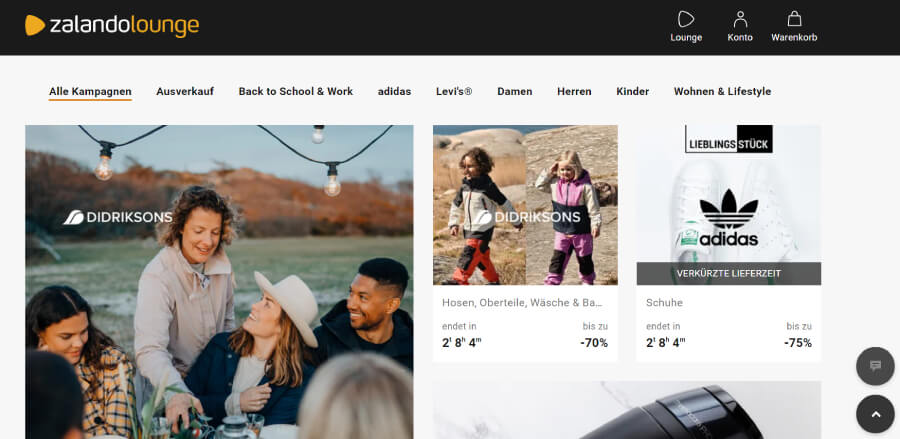
A good example of a microsite is the "Zalando Lounge," which belongs to the wholesaler Zalando. It presents itself as an exclusive shopping club where customers can find special offers. The site offers the opportunity to purchase an offer within a certain time frame and complements the main domain of Zalando.
If you interlink the microsites with each other and with the main website, they will mutually strengthen each other. To do this, set up a 301 redirect. This way, you can also transfer almost all backlinks to your site, even with purchased domains.
Conclusion
A multiple-domain strategy is excellent for larger companies with complex content. While the concept requires significant effort, it pays off in the long run if you want to maximize your revenues and position yourself well in the online market.
Importantly, always prioritize the quality of your content and only implement this concept if you have the necessary resources to maintain all domains equally.
For your long-term success, you need to be patient because, like all reputable SEO practices, there are no shortcuts for the multi-domain strategy.