
Sales Psychology for Websites:
These points you must absolutely consider!
 These points you must absolutely consider!" >
Klaus Huber
11.05, 2021
If you want to know under which conditions customers click on your offer, our comprehensive article on sales psychology shows you how to cleverly appeal to the emotions of your users and attract prospects for your product.
With us, you'll learn everything from information processing to understanding your customers' needs, and to strategies and principles that you can apply profitably on your website.
Information Processing and Perception
Every day, we are bombarded with countless advertising messages. It is evident that we cannot perceive and process all of them in detail. To understand how customers perceive your offer, let's first look at a person's information processing.

In psychology, a distinction is made between peripheral and central information processing. In peripheral information processing, we are only minimally involved with the content and primarily perceive things emotionally.
This is the case, for example, when we attend a lecture on a topic that we are not very familiar with. We pay more attention to the speaker's voice, facial expressions, and gestures rather than the content.
In central information processing, we are highly involved with the topic and pay more attention to the content. Information is predominantly processed rationally.
When customers search for a specific term and land on your website, they are generally highly involved because they have already been engaged with the topic beforehand. Here, you can score with credible statements and facts.
On social media platforms, people are weakly involved. They are usually browsing without having a specific topic in mind. They are just "passively absorbing" content. Here, it's worth using images and videos as they strongly appeal to human emotions.
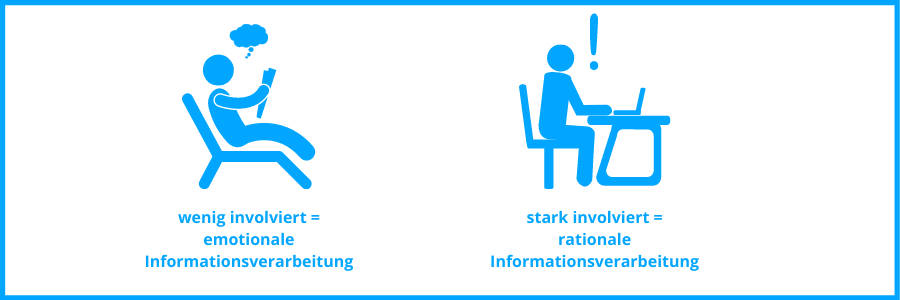
In situations of low involvement, we need to be "activated" by a stimulus before we pay attention to details. This stimulus can be triggered by appealing to certain emotions.
For instance, if you send a newsletter to potential customers, writing something like "Our new vacuum robot efficiently cleans your apartment" will hardly win you any prospects for your offer because there is only low involvement.
However, if you appeal to an emotion, such as curiosity, you have better chances. For example, "How our new vacuum robot saves you 2 hours of work every day." This way, recipients are more likely to open the newsletter.
Customer Needs and Demands
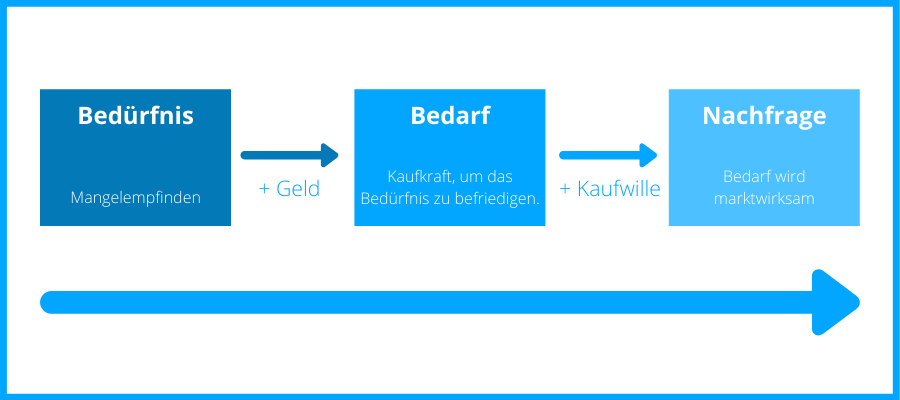
In marketing, a distinction is made between customer needs and demands. A need can be described as a desire of a person. For example, we desire a new car. However, this desire will remain just that if we do not have enough financial means to purchase a new car.
Only when we have the purchasing power to satisfy our need, it is referred to as "demand". So, if we wish for a new car and have the money available to buy it, then we have a demand. Once this demand becomes effective in the market (e.g., purchasing the car or obtaining a quote), it is referred to as demand.
Maslow's Hierarchy of Needs
The needs that can trigger a demand are classified into different categories. These are illustrated using Maslow's Hierarchy of Needs. The model by American psychologist Abraham Maslow is often used as the basis for marketing strategies.
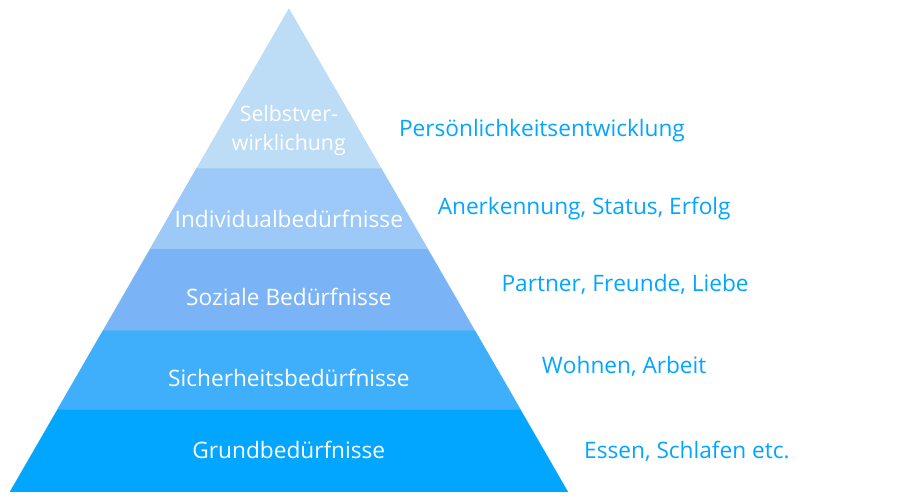
In marketing, especially the social needs, individual needs, and self-fulfillment are of significance.
TIP: Keep this model in mind during your research because modern marketing aims not to impose something on customers but to awaken a need within them.
How to Address Your Customers Specifically
Below, we present you with models that will help you perfectly understand your target audience. Because only when you know your customers can you effectively trigger a need within them.
The Limbic Model
The Limbic Model was developed by the German psychologist Dr. Hans-Georg Häusel. It serves the purpose of classifying customers based on their individual personalities.
Each person has a different emotional focus. Since buying decisions are primarily emotional decisions, this leads to various "buyer types." Assigning target groups based on age, gender, origin, and income is no longer sufficient.
For example: Prince Charles and Elton John are both male, born in Great Britain, in their early 70s, and both have incomes of several million pounds per year. However, you wouldn't assume that they have the same purchasing interests, right?
Instead of relying solely on sociodemographic data, you should consider the emotions of your target audience based on this classification:
- The Traditionalist seeks order and security. He examines everything very carefully, prefers to buy local products, and is a typical loyal customer.
- The Harmonizer seeks comfort and has a strong need for care and attachment. He particularly enjoys purchasing home, garden, kitchen, and pet products.
- The Open-minded is very receptive to new things. He likes products that promise enjoyment and pays attention to quality.
- The Hedonist is very spontaneous, dislikes overthinking, and prefers extravagant products. He consumes for pleasure and is a typical impulse buyer.
- The Adventurer is highly adventurous and assertive. Fun is an important product feature for him. He loves discounts and reduced goods.
- The Performer is ambitious and status-oriented. He likes to buy luxury items and showcase them. In a discount store, he only buys items he can use discreetly.
- The Disciplined has a strong sense of duty and relatively low consumer desire. He only buys what he truly needs and pays attention to quality and safety.
- The Indifferent cannot be assigned to any category. He primarily buys mass-produced products and has a limited budget.
TIP: You don't have to focus on just one of these customer types, as often we are a combination of several categories. However, you should address the main type that best fits your offer.
Create Buyer Personas
To better classify your target audience, it is recommended to create so-called Buyer Personas. These are fictitious customer profiles that represent the typical recipients of your offers. This approach is very specific. An example of a Buyer Persona would be:
- Helena Bauer
- 57 years old
- resides in the suburbs in a single-family house
- married, with two children and one grandchild
- loves her garden and enjoys hiking
- likes to read typical women's magazines
- uses the internet occasionally to make purchases
TIP: We have summarized how to create such a Buyer Persona for your company in our Buyer Persona article.
Identifying and Addressing Purchase Motives
We always buy products for a specific reason or to achieve a certain goal. These purchase motives can also be divided into different categories.
Each purchase motive can be addressed on your website through various methods. We have compiled an overview of all motives and provide you with tips on how to implement them on your website.
Prestige and Status
- Emphasize exclusivity and highlight what sets the buyer apart from the crowd.
- Provide indications of customization options.
- Words: exclusive, premium, unique, handmade, etc.
- Colors: black and purple
Relief, Convenience, and Comfort
- Highlight that the product or offer will provide relief to customers in their everyday life or work.
- Make the ordering process as simple as possible. An easy ordering and purchasing process is often stronger than any purchase motive!
- Words: easy, effortless, convenient, practical, etc.
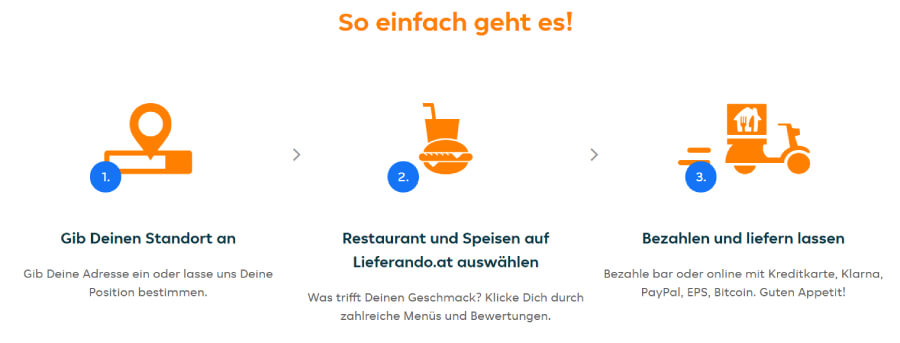
Delivery services, especially like "Lieferando," work with the motive of "convenience."
Health and Well-being
- Present before-and-after pictures and customer testimonials.
- Refer to studies and positive ingredients.
- Words: organic, natural, nature, etc.
- Colors: yellow and green
- Particularly important for cosmetics, sports, and medical products.

The spice retailer "Achterhof" advertises its organic-certified products and focuses on purely plant-based ingredients, prominently placing them on the homepage.
Enrichment and Gain
- Emphasize that you offer the best value for money.
- If possible, offer discounts with strikethrough prices.
- Show how quickly an investment will pay off.
- Words: free, economical, gratis, discount, etc.
Safety and Security
- Provide detailed information about warranties, service hotlines, and return policies.
- Testimonials, reviews, quality seals, and certifications build trust in your brand.
- Highlight aspects like reliability and customer service.
- Always explain to the customer what comes next, e.g., through confirmation pages and emails about shipping and order status.
- Words: stable, durable, reliable, competent, secure, etc.
- Color: blue
- Particularly important for: YMYL content, tax advisors, lawyers, insurance, banks, doctors, etc.
Curiosity, Desire for Discovery, and Playfulness
- Mention special features and technical details.
- Apply gamification elements (e.g., progress bars during the purchasing process).
- Show the manufacturing process.
- Offer an online configurator or personalization if possible.
- Words: new experience, try now, experiment, etc.
- Particularly important for technical products.
Self-Realization
- Emphasize that the offer helps the customer to be their authentic self.
- Service and advice should take precedence. Customers want individualized guidance.
- Particularly important for fashion shops and travel providers (e.g., offering personalized travel itineraries).
Social Commitment and Consciousness
- In this area, focus on emotional marketing. Use images and videos rather than excessive text.
- Highlight the company's environmental and social engagement. Choose a project you can support and stand behind.
- Make your production processes transparent.
- Words: eco-friendly, sustainable, organic, etc.
- Color: green
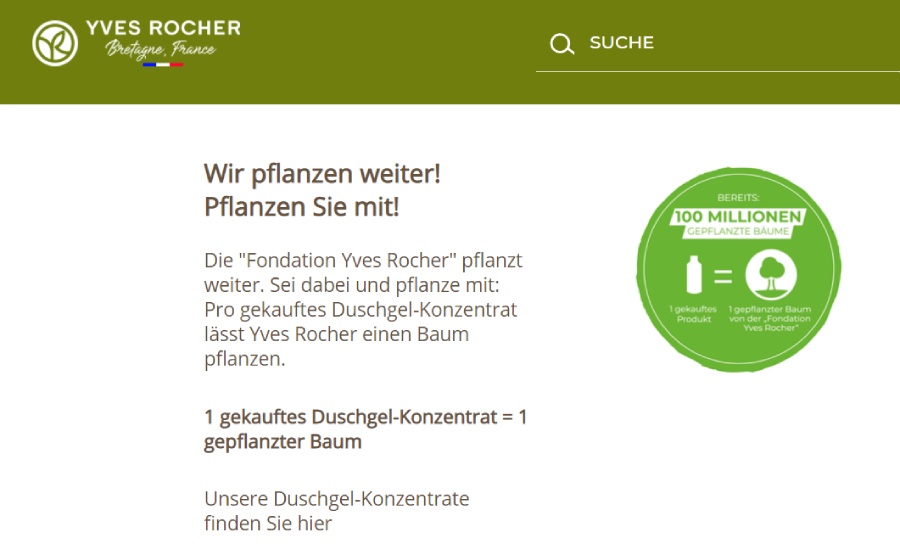
The cosmetic shop "Yves Rocher" leverages this concept by allowing customers to plant a tree with every purchase of a product.
Sense of Adventure and Willingness to Take Risks
- Opt for adventurous communication and bold slogans like "Not for the faint-hearted!"
- Especially suitable for sports and outdoor products.
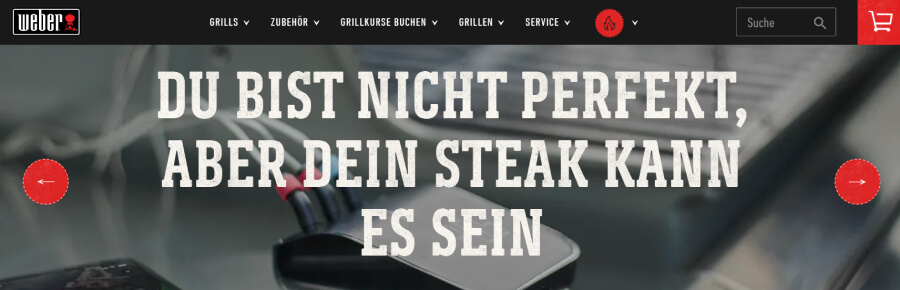
The grill brand "Weber" advertises with bold messages.
Desire for Contact and Sociability
- If the offer can be experienced together with other people, emphasize that on your website.
- Address topics that strengthen the sense of community (e.g., hobbies and family).
- Words: together, like-minded, "Join in!" etc.
- Social media groups and closed email lists help create a sense of belonging.
- Offer webinars and video conferences.
Determining Purchase Motives
Naturally, you also want to know how to identify the purchase motives of your users. You can use the so-called 5-Why Technique to easily and quickly discover the purchase motives of your potential customers.
First, analyze the customer's current situation and identify their current problem:
- What happened to the customer?
- When does the problem occur?
- Where does the problem occur?
- Does it occur regularly?
- How was it discovered?
- Who was involved?
- What are the consequences of the problem?
Then ask a series of "why" questions that build on each other and decode the problem.
TIP: It doesn't have to be exactly 5 questions. The important thing is to keep probing until the problem is discovered.
Example:
Problem: Mr. Müller visits an online clothing store but does not make a purchase.
- Why doesn't Mr. Müller buy clothing in our online store? Because he was unsure.
- Why was he unsure? Because he was worried that the clothing might not fit.
- Why does he have this concern? Because he doesn't know if the indicated size is right for him.
- Why does he believe the size might not fit? Because there is no size chart with body measurements.
Result: Mr. Müller's purchase motive is security. The problem could be solved by providing size charts or emphasizing the free return policy.
Strategies and Principles for Sales
The following strategies and principles have proven effective in sales psychology over the years in marketing and will also help you maximize your revenue.
Principle of Scarcity
An incredibly effective sales tool is the principle of scarcity. This is based on the "Fear of Missing Out" (FOMO). Out of fear of possibly missing out, we stop thinking rationally about buying decisions.
Scarcity can occur in two ways:
- Timeframe: e.g., "The offer is only valid for 3 more days!"
- Quantity: e.g., "Only 5 items left in stock. Order now!"
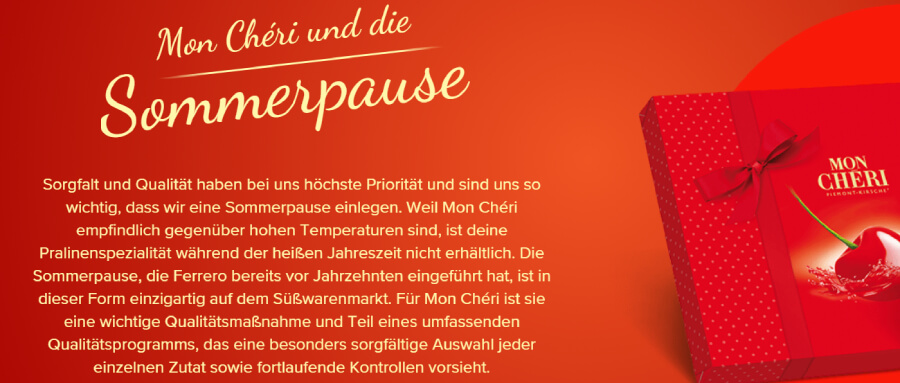
An excellent example of artificial scarcity is the "Mon Cheri" cherry chocolates by the Italian chocolate manufacturer Ferrero. They only sell these chocolates from October to May, claiming that the quality would suffer in the summer heat.
TIP: You can further enhance this effect with reminder emails like "Your last chance!" as many (indecisive) customers tend to buy at the last minute. Seasonal products and limited editions also create a sense of scarcity.
Anchoring Effect
We humans always rely on certain numbers that we unconsciously use as "anchors" for our purchasing decisions. For example, when prices are listed as 4.99, we tend to focus on the number 4, making the price seem cheaper unconsciously.
This anchoring effect is even more powerful when it comes to choosing between different offers. When we have to choose between a cheap and an expensive alternative, we tend to choose the cheaper option.
However, if we are presented with a third, much more expensive option, we are more likely to prefer the middle, previously expensive option. It's like saying, "You can't go wrong with this."
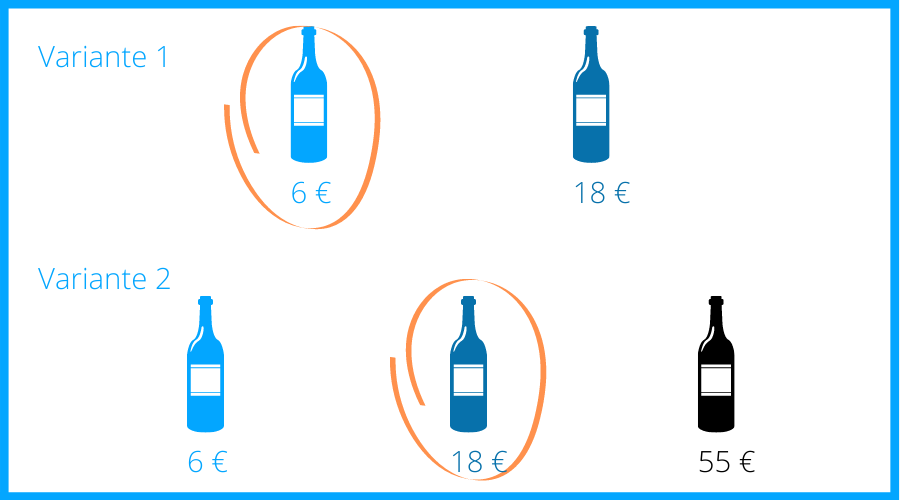
Magazines, especially, make use of this effect in their subscription models by adding a much more expensive, third option.
TIP: If you have multiple offers on your website, try presenting them with an additional third option.
HALO Effect
The HALO effect leads us to make assumptions about other characteristics based on one positive attribute, even without any evidence. For example, if we have a positive impression of a website (e.g., due to fast loading times and an appealing design), we unconsciously assume that the offer on the site is also good.
However, don't forget about the Domino effect. If the first impression is convincing, the customer must remain interested through further good content.
TIP: Ensure a clear website design and fast loading times to satisfy your users' first impressions.
Primacy-Recency Effect
The primacy-recency effect states that the first and last pieces of information are perceived most strongly and also remain in memory the longest. When applied to websites, the first piece of information is the title and the last piece of information is a meaningful call-to-action.
TIP: You can also make use of this effect in lists and enumerations.
Choice Overload Effect
The choice overload effect states that when faced with too many options, we tend to be inclined to make no choice at all.
In a field study from 2000 in the US, different jams were offered for sale on tasting tables over two days. The number of jams varied from 6 to 24 different varieties. The result: When customers had only 6 jams to choose from, the likelihood of purchase was much higher than when there were 24 varieties.
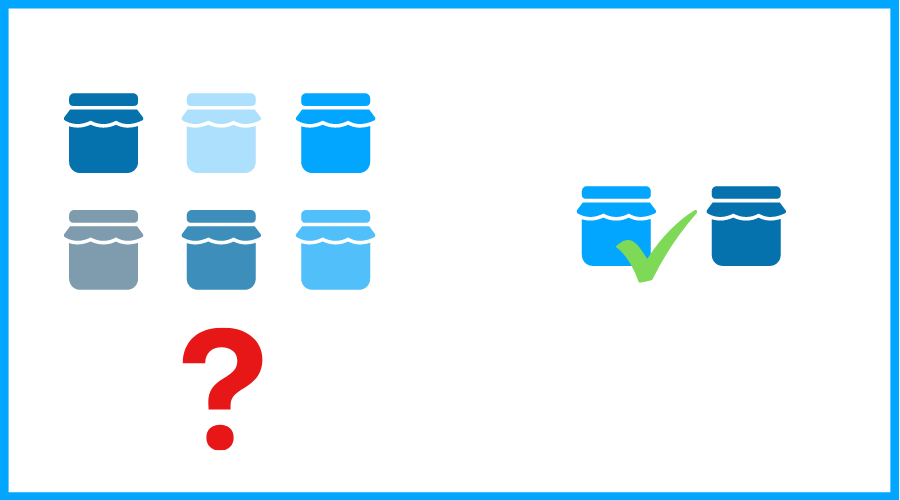
Why does this happen? The larger the selection of different products, the more difficult it becomes to make comparisons and identify differences. Instead of making a wrong choice, people prefer to make no choice at all.
The same applies to web design. The more information and CTAs we encounter, the more overwhelmed we feel. Therefore, design your website as simple and clear as possible.
Die 6 Cialdini Prinzipien der Überredungskunst
According to the US psychologist Robert Cialdini, there are 6 principles that contribute to effectively persuade other people. We will show you how to implement these principles profitably.
Exklusivität (Exclusivity)
Emphasizing the exclusivity of an offer creates a sense of belonging among users. You can create this exclusivity simply by using words like "exclusive" or "premium."
Sympathie (Likability)
To make potential new customers identify with your company, you need to establish a foundation of trust. Customer reviews, testimonials, seals, and certificates can create likability and trust among your users.
Autorität (Authority)
Customers primarily trust experts. You demonstrate expertise and authority on the internet through relevant backlinks and meaningful references that highlight your knowledge.
Konsistenz (Consistency)
Consistency is especially relevant in the context of "cross-selling." If you sell a core product, you should also offer accessories at a lower price. The initial price acts as an anchor. For example, if you sell suits, you can also offer shoes and belts.
Reziprozität (Reciprocity)
Reciprocity is based on the principle of mutual exchange. When we receive something, we automatically want to give something back.
You might have experienced this when a salesperson gives you a product as a gift. You automatically feel obliged and are more inclined to make a purchase.
Online, you can offer your customers, for example, a free info sheet or other downloads before asking them to provide their contact information.
Social Proof
Imagine walking past two restaurants. One is completely empty, and the other is filled with lots of guests. Which one would you prefer to eat at?
We automatically assume that the restaurant with more guests must be better, as we humans are natural imitators and want what others already have.

You can apply this principle on your website by using sentences like "Over 1000 customers already trust us" or "This post has been shared 152 times."
TIP: For online shops, you can also sort your products by bestsellers to highlight the popularity of the offer.
Unterbewusste Ansprache von Kunden
We perceive many marketing messages on a subconscious level, which is why we often can't rationalize our purchasing decisions.
The following psychological principles and effects will also subconsciously influence your customers' perception.
Facial-Distraction-Prinzip (Facial Distraction Principle)
The so-called Facial Distraction Principle states that we automatically try to interpret the facial expressions of others.
This principle also applies when there are pictures of people looking directly at us on a website. For other content like website texts, we then have only a few cognitive capacities left.
TIP: Choose images of people who are looking towards the product on your website. Since we automatically follow the gaze of others, it directs attention to your offer.
Also, avoid showing "archaic" dangers such as snakes, spiders, or predators. These will draw all the focus, as humans are wired to notice threats.
Picture-Superiority-Effekt
The Picture-Superiority Effect states that images are much better retained in memory than plain text. This is especially true when the images relate thematically to the content. After one day, around 10% of the information in plain text is remembered. In contrast, when text is paired with thematically relevant images, after three days, 65% of the information is retained (see also: Verkaufspsychologie im Online Marketing, C. Tembrink).
TIP: Use graphic images and infographics to illustrate the content of your texts.
Die Fuß-in-die-Tür-Technik (Foot-in-the-Door Technique)
With this technique, you first make a small request that your customer can hardly refuse (e.g., a brief feedback). After that, the likelihood increases that they will accept another request (e.g., providing contact details). This tactic works similarly to the Yes-Set technique.
Reaktanz-Phänomen (Reactance Phenomenon)
The Reactance Phenomenon states that a user who is put under pressure automatically responds with resistance. Many calls-to-action are formulated too directly and aggressively, which can make some users feel intimidated.
TIP: A CTA with the phrase "Buy now" can be too stressful for the user. Try offering an alternative such as "Request product information now."
Hobson's + 1 Choice - Effekt
Normally, the customer has the option to "buy" or "not buy." By adding a third choice, the "not buy" option is pushed into the background and is less perceived. For example, the choice between "buy now" or "add to cart." This way, the customer seemingly has the choice between "buy now" or "buy later."
Jakob's Law of Internet User Experience
Jakob's Law of Internet User Experience states that customers expect a website to function just like most others do. For example, we expect the search bar to be located in the header of the page and not at the bottom.
So, pay special attention to essential functions like the search bar or shopping cart to ensure an intuitive user interface.
Design-Prinzipien
When a user arrives on a website, three subconscious questions arise, which you need to answer with your website layout:
- Where am I? Provide a concise headline that explains what the user can expect on the page.
- What are the benefits for me? Show the benefits of the content on the page.
- What should I do next? Best represent this with a compelling CTA.
TIP: Ensure that this information is in the visible area of the website (Above the Fold).
If you operate an online shop, create a real shopping experience for your users with product images from all angles or three-dimensional representations.
Farbpsychologie
As you already know, marketing is highly emotional. The right color choice in your website design is crucial, as colors can easily convey emotions and unconsciously evoke certain feelings in us:
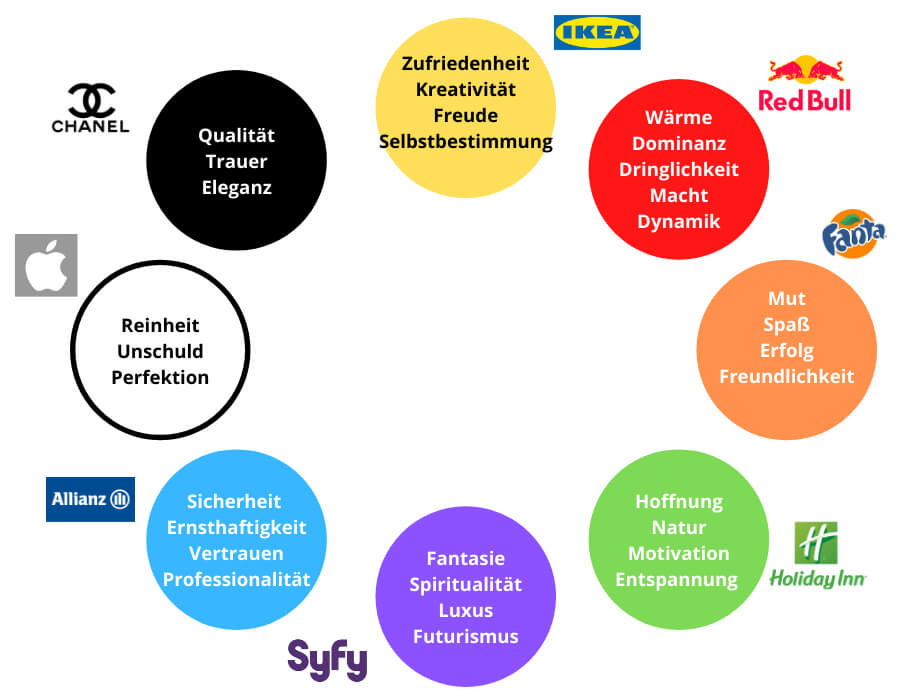
TIP: Green is a color that is easily perceived by the eye and is therefore often used for CTAs. Always choose a second contrasting color as well - preferably the complementary color.
Fazit (Conclusion)
Modern marketing aims to awaken a desire in the customer that may not have existed before or was only subconsciously present. By skillfully using sales psychology, you can address these needs on a subconscious level.
Since the buying process is rarely rational but emotional, you need to appeal to users' emotions with your content. We have presented you with some principles and methods that will undoubtedly help you achieve this.
Mit uns sind Sie immer up to date: Our articles are continuously expanded and regularly updated.