
UX Design 2022:
What You Absolutely Need to Know When Running a Website!
Klaus Huber
18.06, 2021
UX Design - A term that has probably come across the minds of some website operators. Especially in 2022, UX Design is almost indispensable. However, there is often confusion surrounding the topic. If you feel addressed, then you are in the right place! We will get you up to speed and show you what you absolutely need to know about User Experience.
What is UX Design: Definition
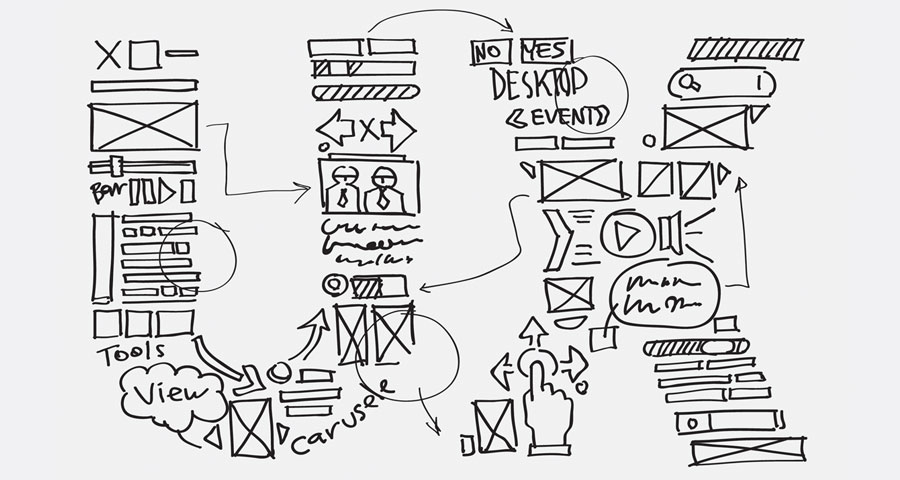
UX is an abbreviation for the term User Experience, which means "Nutzererfahrung" in German.
UX Design belongs to the field of web design and is a process for creating usable systems. A UX designer deals with the interaction of real human users and daily products or services, such as websites or apps. The needs of users are analyzed to implement the insights gained into a user-friendly interface.
Through a holistic view of the users, a positive customer experience is ensured. This requires consideration of aspects from psychology, business, market research, design, and technology. As you can see, the profession of a UX designer is very diverse and varied.
According to the DIN EN ISO 9241-210 standard, it means "user experience".
What are the goals of UX Design?
Whether it's Netflix, Amazon, or Airbnb: The service is the product!
The goal is to simplify the representation of complex systems to optimize the user experience. As the abbreviation UX already suggests, the focus is clearly on the users.
You probably know it yourself - most people are lazy and don't want to deal with new systems for too long. This is due, not least, to the short attention span. It is well known that this has decreased in recent years. A user decides within 90 seconds whether to stay on a particular page or leave it. That is why UX Design is becoming increasingly important.
By creating a positive user experience, both customers and the respective companies/institutions that have optimized their website, app, etc., according to UX guidelines benefit.
On the one hand, good UX design saves you costs and time, which in turn leads to more profit. On the other hand, it ensures that your customers are satisfied and continue to use your services. When your customers are completely satisfied, new customers won't be long in coming. In addition, with better product quality, you build trust with your customers in your brand. This trust creates loyal customers who then become brand ambassadors in their surroundings.
The Origin
Contrary to expectations, the term UX is not new. In fact, it has been around since the early 1990s. It was introduced by the cognitive scientist Donald Norman, who worked for Apple at the time. He was interested in all aspects of the user experience with a product or service, including industrial design, graphics, user interface, and physical interaction. To capture all these elements that determine how a user feels during interaction, he coined the term "user experience".
UX vs. UI Design
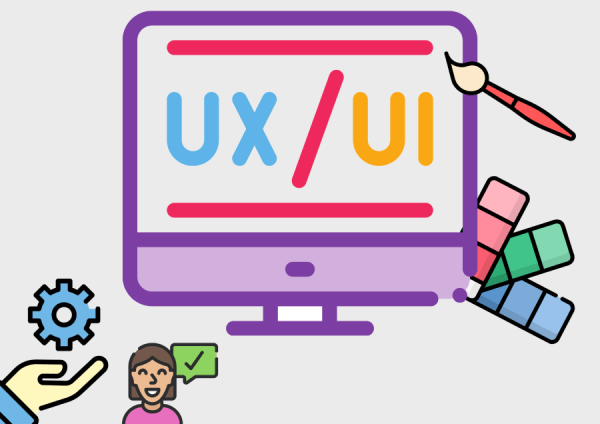
Oftentimes, the terms UI and UX are confused with each other. While they are related, there is still a significant difference between these two disciplines:
UI Design (User Interface) focuses on visual design. On the other hand, UX Design concentrates on providing a positive user experience. The user should feel good during and after interacting with a user interface. The main emphasis is on creating positive emotions.
Both disciplines are important and influence each other. UI Design provides the appropriate look, and UX Design provides the right feeling.
UX Design and Usability
Similar to UI Design, there are questions about the difference between User Experience Design and Usability. And if there is a difference, where exactly does it lie.
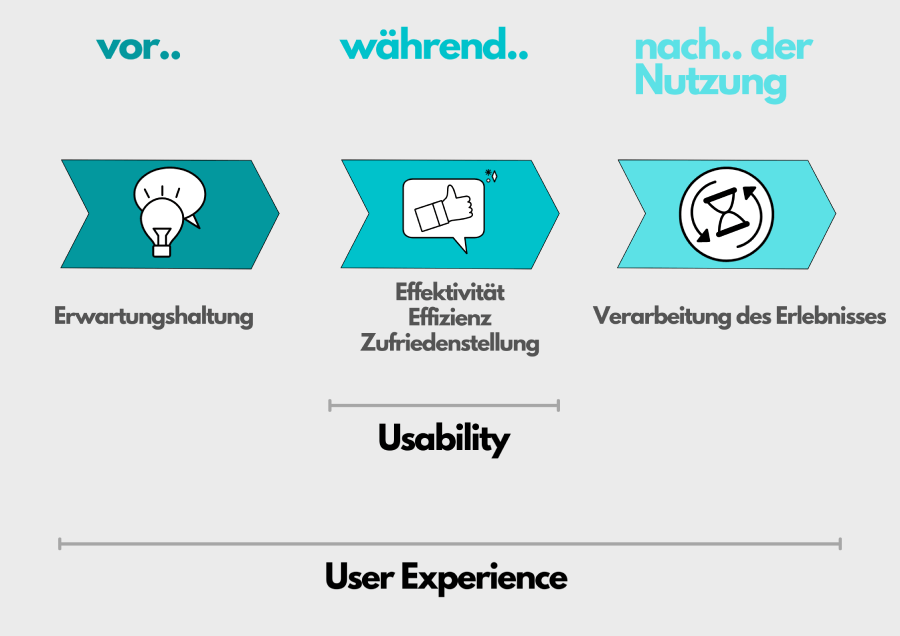
The following diagram shows how the two terms are related:
Usability:
Usability describes the user-friendliness of a product, system, or service. It always focuses on the respective target groups and users. User-friendliness is subjective. Each user assesses it differently because everyone has different knowledge and requirements. Therefore, it cannot be generalized as "easy" or "complicated" usability. Instead, usability depends on the specific target audience.
DIN ISO 9241-11
Usability is the extent to which a system can be used by specific users in a specific usage context to achieve specific goals efficiently and satisfactorily.
User Experience (UX):
As explained in the definition, UX Design is about the user experience.
User experience encompasses the entire experience one gains when using a product, etc. It extends the concept of usability by adding emotional aspects, physiological and psychological reactions, and perceptions, such as enjoyment or enthusiasm before, during, and after use.
Usability (user-friendliness) comes into play during use and therefore is a part of the overall user experience.
What does a UX Designer do?
The profession of a UX Designer is gaining popularity. Therefore, many are interested in learning exactly what a User Experience Designer does: What are typical tasks? What skills does a UX Designer need? What does the design process look like?

A UX Designer primarily focuses on the behavior and emotions of users when interacting with a system. They deal with the architectural and cognitive structure of a product. In doing so, they pay attention to potential user problems and try to empathize with users. Developing empathy is essential to understanding users' wishes and needs. Additionally, a UX Designer needs to ask questions like why, what, and how to define a target audience. Before starting the design process, the motivation of the target audience must be clarified. The designer requires a holistic view of the usage context of a product or service. Furthermore, the desired features, accessibility, and appearance must be defined.
A UX Designer, therefore, needs a certain sensitivity and the ability to empathize with different target groups. Most people think differently from the designer, who is ultimately not the end-user. The responsibility lies with the UX Designer.
1. Research/Analysis
Research is a significant part of the work and always takes place before the design process. Through research, frustrating and costly experiences with the final product can be avoided.
The competitive analysis is used to determine how similar products from competitors are positioned and how they could be further optimized.
In addition to the competitive analysis, the user analysis is also employed. The goal is to identify the target audience, as well as their requirements and problems. The user analysis consists of both qualitative and quantitative parts. The qualitative part involves conducting interviews with users to adapt a product as closely as possible to their needs. The quantitative part involves collecting relevant data about the user base and analyzing statistics from customer service.
Furthermore, the development of personas plays a crucial role in the research phase. Personas serve as the primary representatives of the target audience and should, therefore, be precisely defined. If you want to learn more about creating personas, you can check out our article: https://www.seo-agentur.com/seo-ratgeber/buyer-persona.
2. Design
Now, the designing process can begin. UX designers use various tools to map the user's journey through a product. These tools include User Flows (Information Architecture), which are flow diagrams representing the entire path a user takes when using a product. If a user is overwhelmed with too much information, they can quickly get lost during usage. Therefore, content is logically and coherently organized in a hierarchy. Diagrams help create a clear overview, and changes can be easily implemented.
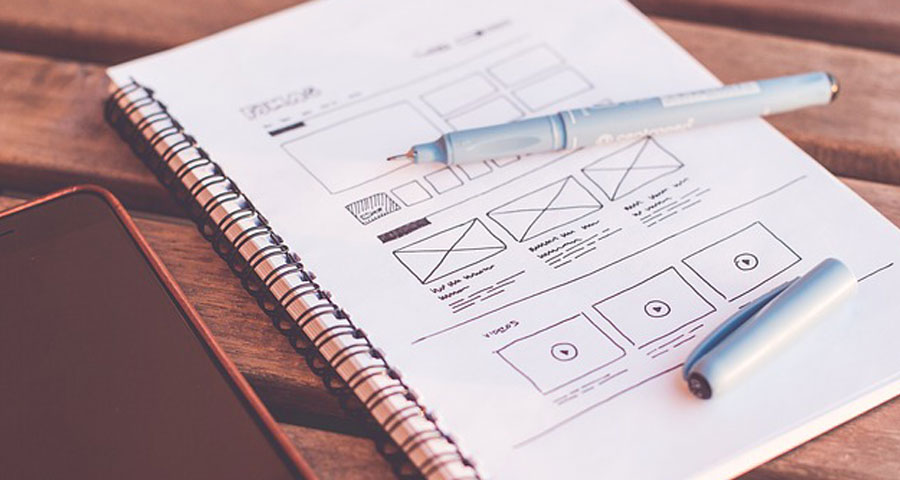
Additionally, Wireframes are used when creating a product with a visual interface, such as an app or a website. A wireframe is a visual blueprint that focuses on the arrangement and positioning of individual elements on a webpage. Creating a wireframe can be as simple as using paper and a pen.
3. Prototype
After finalizing the layout for the product, prototypes are created. A prototype is a design that closely resembles the end product. It can be a simple paper model or a very realistic model that closely mimics the final product. With appropriate software, a well-developed user interface can be created and used for presentation and testing purposes.
Final images, color schemes, icons, and typography are typically handled by a UI designer.
4. Testing
The best way to test prototypes is to have them tested by real users. This helps identify design flaws before the final product goes to market. It is recommended to conduct multiple rounds of testing.
In addition, A/B tests can be arranged. These tests are conducted to compare two versions of a product simultaneously. They can involve selecting between different design options or comparing the product with a competitor's product.
In consultation with clients, developers, and UI designers, the implementation phase can begin. However, the work does not end here. Data and feedback continue to be collected to continuously improve the product.
What Makes a Good UX?
Put simply, a good UX design is easy to use!
Complex content is transformed into easily understandable products. This means that no instruction manual or preparation time should be necessary. The user should be able to use the product immediately and intuitively. They should be able to understand a website/app directly without the need for a learning curve. Additionally, it is essential to keep the number of required actions to a minimum. The more actions a user has to perform to achieve their goal, the more likely they are to abandon their journey and leave the website. While this may sound obvious to many, creating good UX design requires a lot of work. Many people are not aware that the better the UX of a product is, the less we notice it. This is simply because we are accustomed to understanding content directly. Only when we encounter bad design do we react negatively to it.
Best Practices
1. Apple
Co-founder of Apple, Steve Jobs, was well aware of how crucial UX design is for the success of a product.
"You've got to start with the customer experience and work back toward the technology, not the other way around." - Steve Jobs
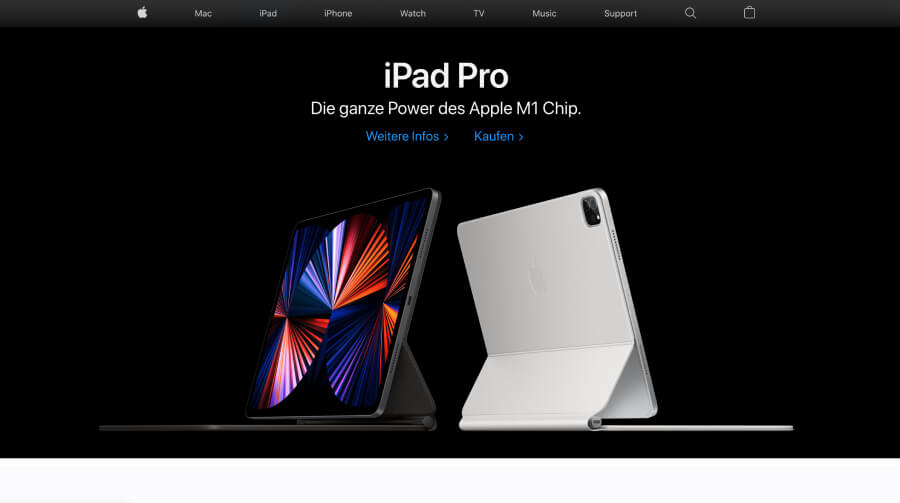
To this day, Apple continues to perfect the balance between excellent user experience and minimalist design in its hardware and software products. All products are easy to use and intuitive. Moreover, the clean and well-designed interface contributes to a strong brand recognition.
2. Airbnb
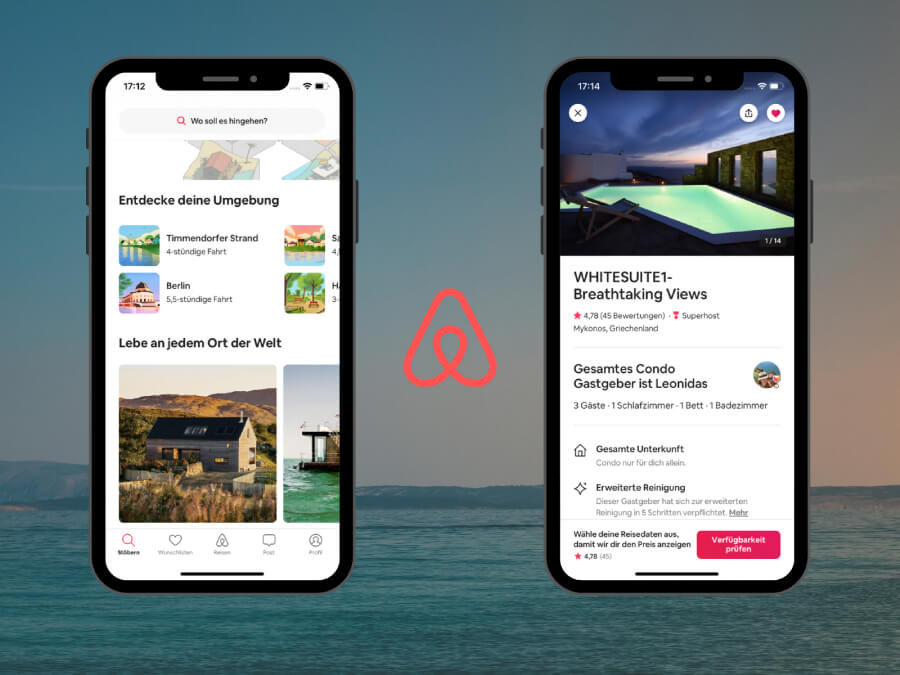
Airbnb is another example of a product with excellent UX. The online marketplace for accommodations is easy to use on both smartphones and desktops. Users can quickly find the desired accommodations through numerous filtering options. If the user has no specific destination in mind, they can explore various suggestions presented on the homepage. Additionally, the search can be initiated without having to create a time-consuming user profile beforehand. The icons at the bottom provide clear navigation, allowing users to switch between different sections with ease.
Airbnb knows what users are looking for, and they do not need an extensive introduction to the company's services.
What to Avoid?
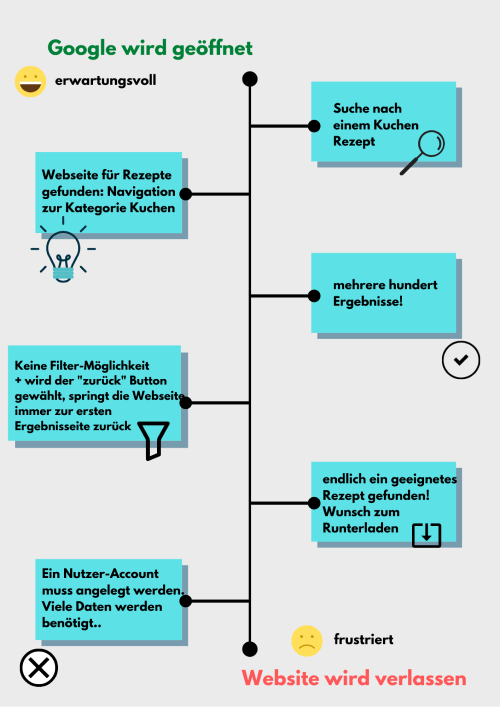
This diagram illustrates what a poor user experience might look like. You might have encountered a similar situation before: You open Google and search for a cake recipe. You find a recipe website and browse the "Cake" category. At first, you are pleased to see several hundred results. However, there are no filter options to display only the recipes relevant to you. Additionally, every time you view one of the recipes and then click the "back" button to look at another one, the website jumps back to the first page of results, even though you were already on page four. This is frustrating and annoying, as it costs you a lot of effort to find the relevant recipes. Finally, when you find a suitable cake recipe, you want to download it to view it offline on your smartphone. However, this function is only available if you create a user account. You are not comfortable sharing so much personal data. By this point, you are very frustrated and decide to leave the website.
A poor user experience can happen anywhere. Every product or service you encounter elicits an experience. Is the product easy to use? Does it allow you to accomplish your desired task with minimal effort? UX designers should focus on these indicators to create a good user experience.
Benefits for SEO
A user-friendly design of a website or app has a positive impact on search engine optimization (SEO). Firstly, you benefit from increased user retention as users can navigate easily. Secondly, you score points with a "Google-friendly" design because UX design revolves around meeting the needs of users, which is Google's top criterion for high rankings. Furthermore, you enhance conversions as satisfied users often become paying customers, leading to positive reviews and increased visibility. Therefore, UX design can also contribute to customer retention. It can be concluded that UX design is an essential factor for successful online marketing, particularly for search engine optimization.
Conclusion
It is essential to emphasize that users are the central element of UX design. Understanding plays a crucial role in this regard. As a UX designer, it is crucial to comprehend the interests and needs of the target audience to implement them effectively. It is also important to continue working on a product and incorporate feedback after its launch to continuously improve it.
Well-executed UX design leads to trust and satisfied, loyal customers. In a fast-paced and interconnected world, your company can only thrive if you provide your customers with a good user experience.